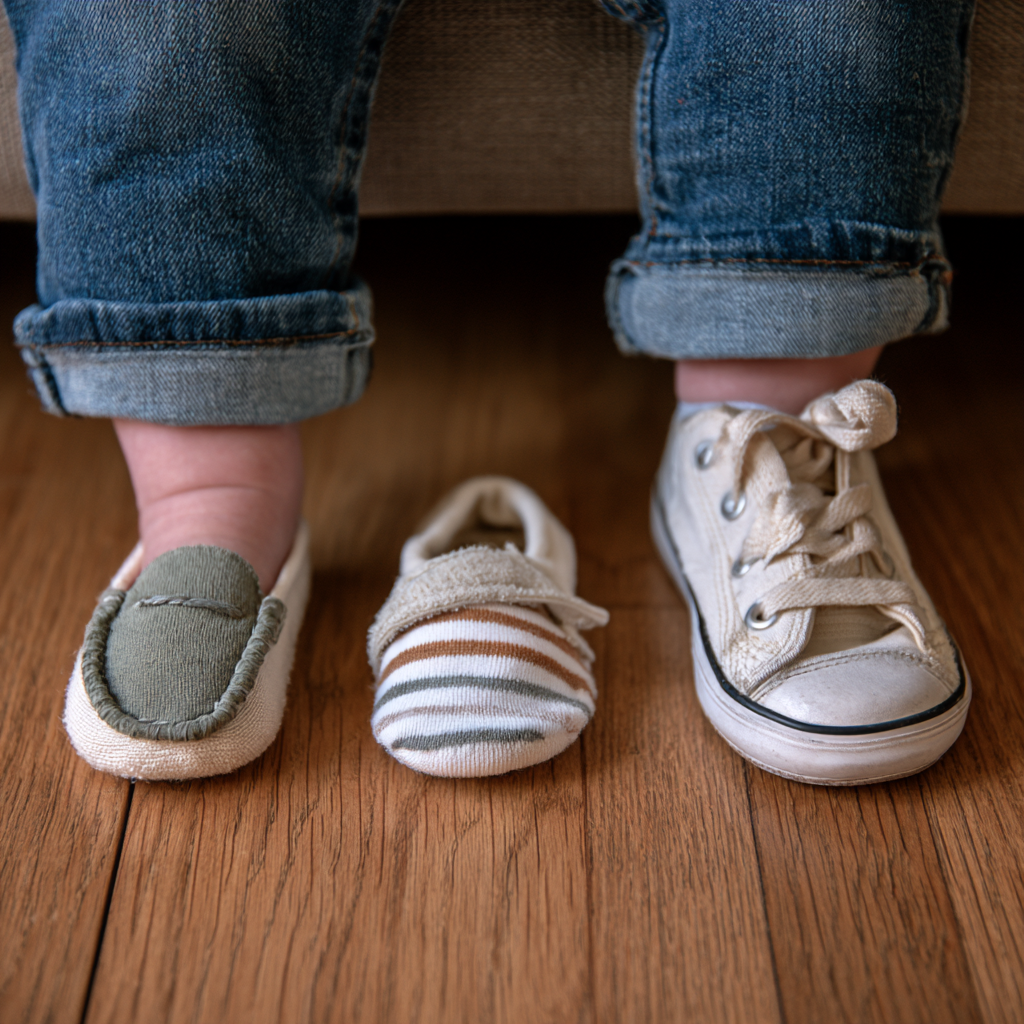
Walk into any baby shoe aisle and the choice is overwhelming: stiff little sneakers, soft barefoot shoes, grippy sock shoes, leather booties. Which is actually best for a baby learning to walk? The good news is that the expert consensus is refreshingly clear, and it probably means spending less, not more. Here's how the main options compare, plus two quick tests to judge any shoe for yourself.
First, the principle that guides everything
Across pediatric and podiatry advice, the same idea comes up again and again: for babies and new walkers, footwear should be as close to barefoot as possible while adding protection. Baby feet are still developing, and they build strength, balance and coordination best when they can flex, feel the ground and move naturally. Stiff, supportive, structured shoes — however sturdy they look — can actually get in the way of that. It's worth knowing that healthy young children don't need arch support either; most under-fives have flat-looking feet naturally, and support that stops the foot feeling the ground can hinder development. So the 'best' shoe isn't the most substantial one; it's the one that interferes least.
The three main options compared
|
Type |
What it is |
Pros |
Cons |
Best for |
|
Barefoot / minimalist |
Very thin, flexible sole; wide toe box; close-to-barefoot feel. |
Excellent for development; protects outdoors. |
Often pricier; thin sole less warm indoors. |
Outdoor walking once steady. |
|
Sock shoes |
Knitted sock upper + flexible non-slip sole; stretchy, stay-on. |
Barefoot-like flex + grip + warmth; easy on; affordable; washable. |
Not for rough terrain or heavy rain. |
Indoor play, cruising & first walkers; light outdoor use. |
|
Hard-soled shoes |
Stiff, structured sole with firm support. |
Durable; look smart. |
Can restrict natural movement; not ideal for new walkers. |
Occasional/formal wear once walking is established. |
Barefoot shoes: the gold standard for development
Barefoot or minimalist shoes are designed to mimic being barefoot: a paper-thin flexible sole, a wide toe box and almost no structure. For healthy foot development they're excellent, and for outdoor walking once your child is steady, they're a great protective option. The trade-offs are cost — often the priciest choice — and warmth, since a thin sole does little to insulate on a cold floor.
Sock shoes: the practical in-between
Sock shoes take the barefoot principle and make it practical for everyday family life. The knitted upper hugs the foot like a sock and keeps it warm, while a thin, flexible non-slip sole adds the grip and light protection a bare foot lacks on wooden floors and tiles. They flex with the foot rather than against it, so they support the same natural movement as barefoot shoes — but they're easier to get on, harder to kick off, usually machine washable and considerably more affordable.
That combination is why non-slip sock shoes have become such a popular choice for the cruising-and-first-steps stage: close-to-barefoot flex, plus grip, plus warmth, without the price tag of specialist minimalist shoes.
Hard-soled shoes: save them for later
Traditional hard-soled shoes look smart and are durable, but their stiffness is the very thing new walkers don't need. A rigid sole stops the foot flexing and gripping naturally, which can make learning to balance harder. There's nothing wrong with them for occasional or formal wear once your child is walking confidently — just don't make them the everyday shoe for a baby still finding their feet.
Two quick tests to judge any shoe
Whichever type you're looking at, these two checks — used by pediatric podiatrists — tell you if it's right for a new walker:
• The toe-bend test: try to bend the shoe upward at the toe. A good shoe flexes easily at the ball of the foot; if it resists or only folds in the middle, it's too rigid.
• The sole-twist test: hold it by heel and toe and gently twist. It should give a little. A shoe that stays rigid restricts natural movement.
Barefoot shoes and sock shoes pass both easily; most hard-soled shoes fail them — which tells you everything about why the soft options suit new walkers better.
So which should you choose?
For most families, the simplest approach is: barefoot at home while learning, soft sock shoes for grip on hard floors and light outings, and — once walking is well established — a pair of flexible barefoot-style shoes for proper outdoor use. Hard-soled shoes are a 'nice occasionally' rather than an everyday essential. What matters most, whichever you pick, is flexibility, a wide toe box, real grip and the right fit. For the full feature checklist, see how to choose first walker shoes.
What to look for, whichever type you choose
• Flexibility: you should be able to bend the sole easily at the ball of the foot. If it's stiff, it's not ideal for a new walker.
• A wide toe box: toes need room to spread and grip.
• Real grip: a genuine non-slip sole, not just a printed pattern.
• Breathable materials: so little feet stay cool and comfortable.
• The right fit: about a thumb's width of growing room, re-checked every couple of months.
The takeaway: don't overthink it, and don't overspend on stiff, structured shoes a new walker doesn't need. Flexible, grippy and well-fitting beats supportive and rigid every time in the early years.
Browse our full range of soft, grippy My Little Wonder's sock shoe collection and give those first steps a steady start.


Leave a comment
This site is protected by hCaptcha and the hCaptcha Privacy Policy and Terms of Service apply.