
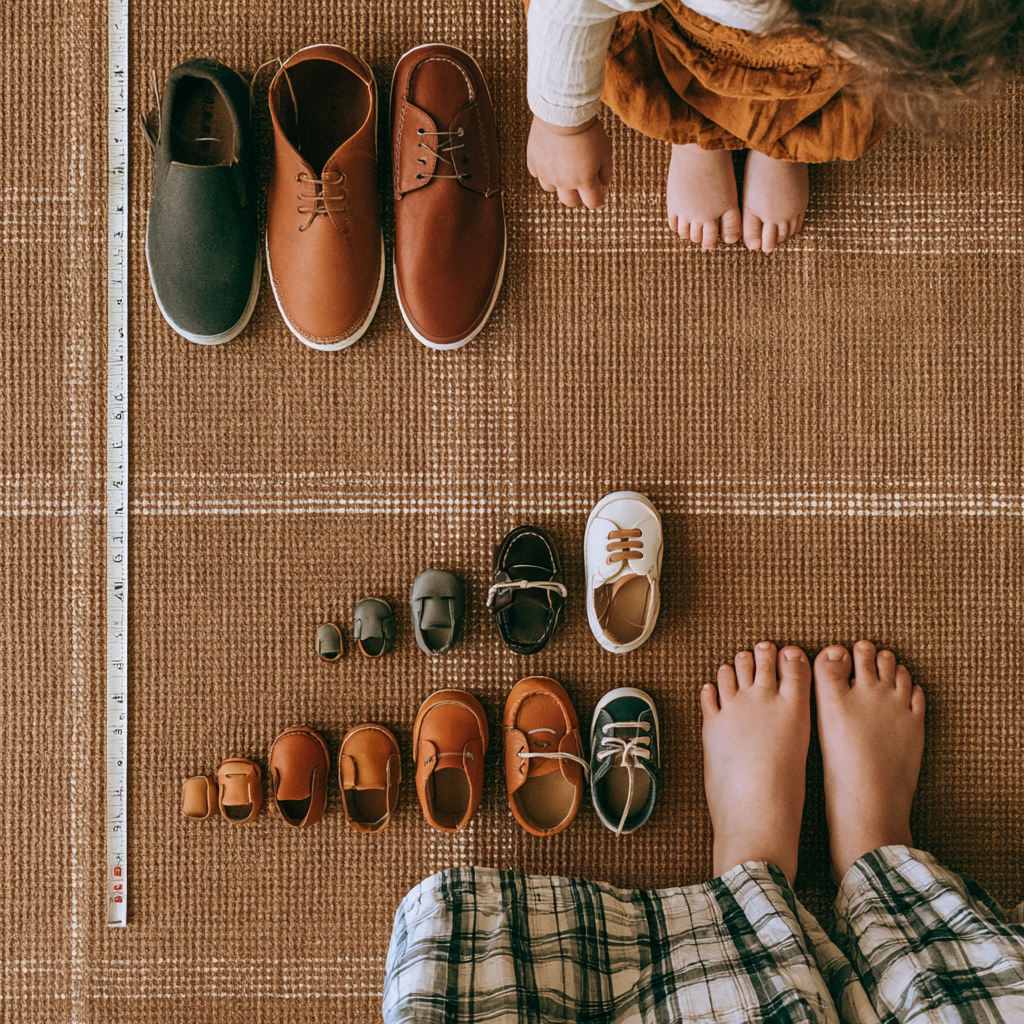
Getting the right shoe size for a baby or toddler is trickier than it sounds. Little feet grow astonishingly fast — often two to three shoe sizes a year — sizing varies between brands, and a shoe that fit perfectly a couple of months ago can suddenly be too tight. This guide gives you a simple age-based starting point, shows you how to measure at home in under a minute, and explains how to know when it's time to size up.
Baby & toddler shoe size chart by age
Use this as a rough starting point only — every baby is different, and age is far less reliable than an actual measurement. The foot lengths are approximate, and shoe sizes vary by brand and region.
|
Age (approx.) |
Foot length |
Typical shoe size (US / UK / EU) |
|
0–3 months |
~9–10 cm |
US 1 / UK 0.5 / EU 16 |
|
3–6 months |
~10–11 cm |
US 2 / UK 1.5 / EU 17 |
|
6–9 months |
~11–12 cm |
US 2.5–3 / UK 2–2.5 / EU 18 |
|
9–12 months |
~12–12.5 cm |
US 3.5–4 / UK 3 / EU 19 |
|
12–18 months |
~12.5–13.5 cm |
US 4.5–5 / UK 3.5–4 / EU 20–21 |
|
18–24 months |
~13.5–14.5 cm |
US 5.5–6 / UK 4.5–5 / EU 22 |
|
2–3 years |
~14.5–15.5 cm |
US 7–8 / UK 6–7 / EU 23–24 |
Because the ranges overlap and brands differ, the single most useful habit is to measure your child's foot and match it to the specific size chart of the shoe you're buying, rather than ordering by age alone.
How to measure your baby's feet at home
You don't need special equipment — paper, a pen and a ruler will do. Measure late in the day, when feet are largest, and measure both feet, since one is often slightly bigger.
1. Place a sheet of paper on a hard floor against a wall.
2. Stand your baby on the paper with the heel against the wall (or hold the foot flat if they won't cooperate — most won't!).
3. Mark the paper at the tip of the longest toe.
4. Measure from the wall edge to the mark in centimeters. That's the foot length.
5. Repeat for the other foot and use the larger measurement.
Add roughly 0.5–1 cm of growing room (about 8–14mm — a thumb's width) to the measured length, then match that to the shoe's size chart. Too much room and the shoe slides and trips them; too little and it cramps growing toes. Always measure with the socks they'll wear, since even a small difference in thickness changes the fit.
How much growing room should you leave?
A thumb's width — about 0.5 to 1 cm — between the longest toe and the end of the shoe is the classic rule of thumb, quite literally. Any more than that and the shoe is too big to be safe for a new walker. A quick extra check: you should be able to slide your little finger between the heel and the back of the shoe with slight resistance. This is one reason soft, flexible footwear is so forgiving early on — there's no rigid toe box to fight against, so a little growing room doesn't compromise the fit.
How often should you check the fit?
In the first year, feet grow surprisingly quickly, so check the fit roughly every six to eight weeks. Between about one and three years growth slows a little, but checking every couple of months is still sensible. Because babies won't tell you a shoe has become tight — their feet adapt gradually — the responsibility is on us to keep checking.
Signs a shoe is too small
• Red marks or indentations on the foot after taking the shoe off
• Toes that look curled or cramped
• Fussing, tripping or refusing to walk in them
• Less than a thumb's width of space at the toe
Signs a shoe is too big
• The shoe slips off the heel when they walk
• Your child trips more than usual
• More than about 1 cm of empty space at the toe
Why the right fit matters for developing feet
Baby feet are soft, flexible and still forming, with cartilage that gradually turns to bone over the early years. Footwear that's too tight can interfere with that development and contribute to problems like ingrown toenails, while shoes that are too big or too stiff make walking harder and less steady. The goal at every stage is a shoe that protects and grips without restricting — which is why lightweight, flexible options are so popular for the first few years.
If you're shopping for that stage, our our sock shoes for babies are designed with a stretchy, forgiving fit and a wide toe box. For more on care and replacing outgrown pairs, see our baby shoe care guide.


Leave a comment
This site is protected by hCaptcha and the hCaptcha Privacy Policy and Terms of Service apply.