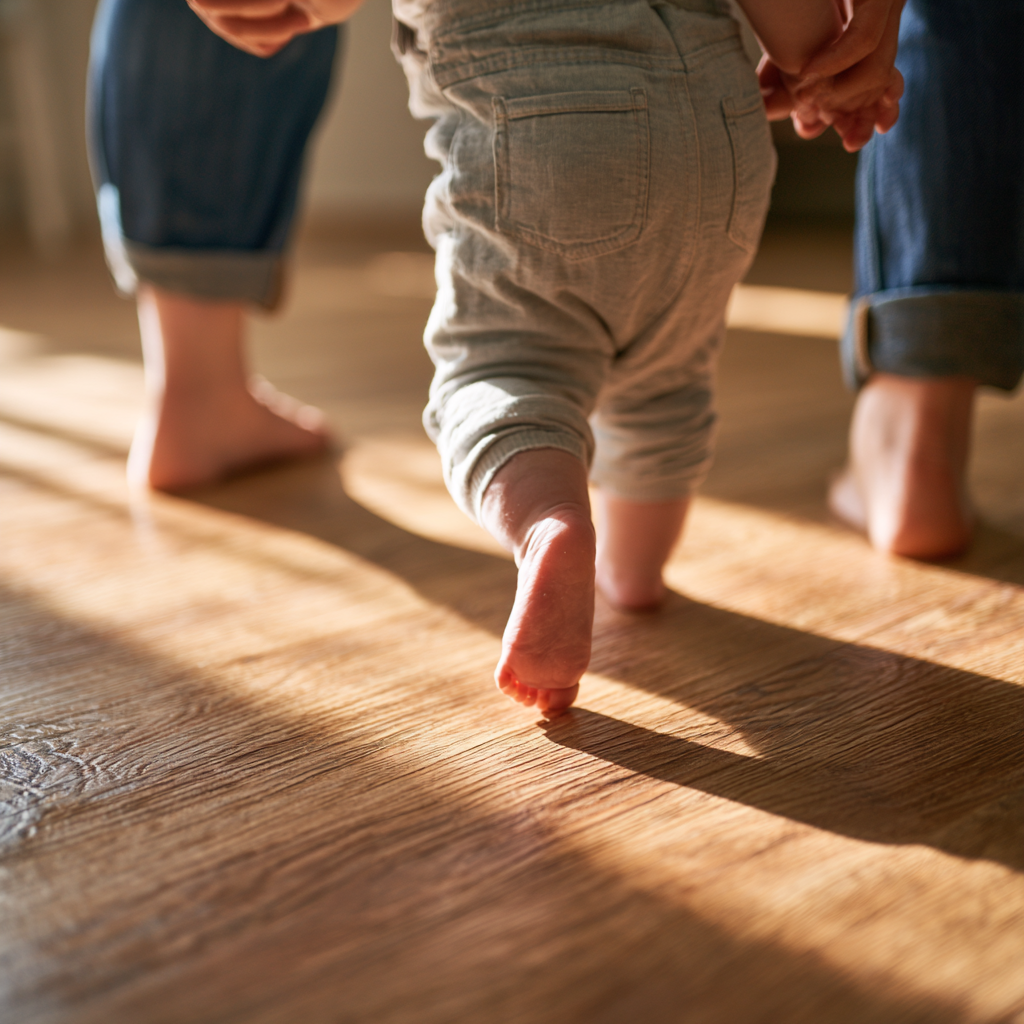
Here's the short answer most parents are surprised by: before your baby starts walking, they don't need structured shoes at all. Pediatric guidance, including from the American Academy of Pediatrics, is consistent — babies develop strength, balance and coordination best when they're barefoot, feeling the ground beneath them. For the early months, soft socks or booties for warmth are all that's required.
Shoes become useful for one main reason: protection. Once your little one is cruising along the furniture and taking their first independent steps, they'll start moving on surfaces that aren't always soft, clean or warm. That's when footwear earns its place — not to prop the foot up, but to shield it while still letting it move naturally.
What the experts say about first steps
The common thread across pediatric and podiatry advice is that early footwear should be lightweight, flexible and non-restrictive. Stiff, rigid shoes — however adorable — can get in the way of a new walker learning to balance, because they stop the foot flexing and gripping the way it naturally wants to. The goal is a shoe that behaves as much like a bare foot as possible, while adding grip and a layer of protection. There's evidence behind this: reviews of children's foot development link habitually barefoot children to better-developed arches than consistently shod peers.
In practice, three things matter most: a flexible sole, a wide toe box that lets toes spread and grip, and reliable traction so your baby doesn't slip on smooth floors. Warmth and easy on-off are the practical bonuses that make daily life easier.
When to make the switch from barefoot to shoes
There's no single magic age — readiness matters more than a number. As a rough guide, many babies take their first independent steps around their first birthday and are walking confidently a few weeks later. Once your little one is reliably up on their feet and wanting to explore beyond the living-room floor, it's a sensible time to introduce footwear for outings and cooler or harder surfaces.
Until then, keep letting them practice barefoot in safe spaces at home. When floors are slippery, grippy sock shoes are a great middle ground — they keep the barefoot feel while adding the traction that stops little feet sliding on wood or tile.
We cover the milestones in detail in our guide to when babies start walking.
Why non-slip sock shoes are the ideal in-between stage
Sock shoes bridge the gap between bare feet and a first structured shoe. They slip on like a sock — no laces to trip over, nothing rigid to fight against — while a flexible grip sole adds the traction and protection a bare foot lacks on hard floors. Because they're soft and stretchy, they move with the foot rather than against it, supporting the natural development experts recommend. They're warm enough for indoor play, easy to pull on and off, tend to stay put far better than loose booties, and most are machine washable.
If you're at this stage, our My Little Wonder's baby sock shoes cover the whole journey from newborn warmth to confident toddler steps, in styles for every season.
What to look for in non-slip baby shoes
• Real grip: a flexible sole with actual traction, not just a printed pattern that wears off.
• A wide toe box: room for toes to spread and grip, which supports healthy foot development.
• Breathable, soft materials: knitted cotton or similar, so feet stay cool and comfortable.
• A stretchy, stay-on cuff: easy to pull on, but snug enough that it won't get kicked off.
• Easy care: machine washable saves a lot of hassle when little feet find mud and mess.
How to get the size right
Measure your baby's foot length and match it to the size chart for the shoe, leaving about a thumb's width of room to grow — but not so much that the shoe slides around. Because little feet grow remarkably fast, re-check the fit every couple of months. If your child falls between sizes, sizing up is usually safer, as long as the shoe still stays securely on the foot.
For a size-by-age chart and how to measure at home, see our baby shoe size guide by age.


Leave a comment
This site is protected by hCaptcha and the hCaptcha Privacy Policy and Terms of Service apply.